

Carbon steel
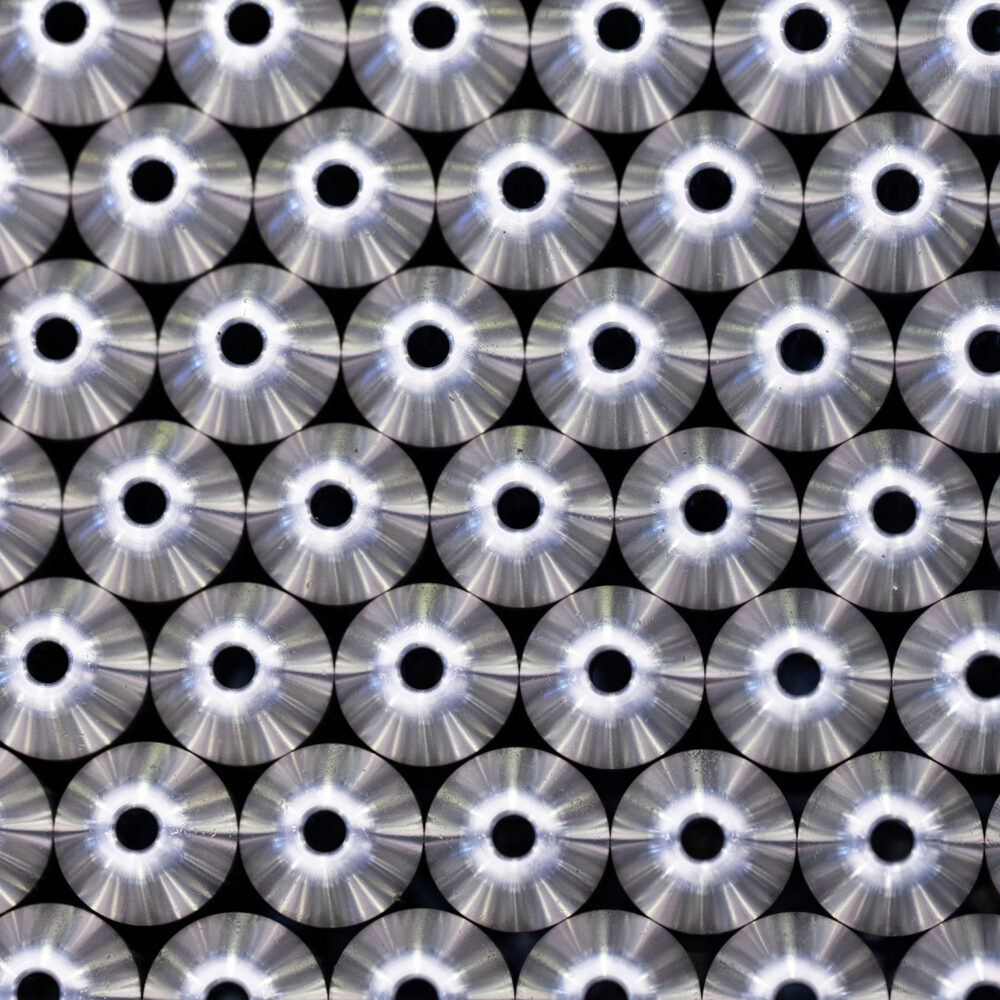
Industrial strength and versatility.
It is the most widely used family of materials in the world, the true backbone of mechanical engineering and carpentry.
Due to the modulability of carbon content, these steels offer a vast range of performance: from maximum ductility for cold forming, to extreme hardness and wear resistance achievable by quenching.
Properties
Properties
Properties
Properties
Properties
Properties
Properties
Properties
Modular Resistance
The mechanical strength is not fixed but depends on the percentage of carbon and heat treatments. This allows the material to be calibrated to the specific application.
Weldability and Deformation
In low-carbon versions, it provides excellent weldability and cold workability. Ideal for sheets, pipes and profiles that require deformability.
Hardness and Wear
Increasing the carbon makes for an extremely hard and wear-resistant material. Essential for mechanical components subject to heavy friction.
Productive Versatility
It is suitable for any process: turning, milling, rolling and stamping. Due to its excellent cost-performance ratio, it is the standard material par excellence in the industry.
Areas of application
Carpentry and construction
Structural frames, beams, scaffolding and supports. Chosen for its ability to support high loads and ensure stability over time.
General mechanics
Shafts, gears and plates made from medium/high carbon steels to ensure wear resistance and coupling precision.
Automotive
Frames, suspensions, brake discs, and structural components that require passive safety and shock absorption capabilities.
Industry and tooling
From work tools to components for machinery and household appliances: the reliable choice for mass production.
Machined alloys
We handle the full range, from structural steels to automatic steels (lead/sulfur) for high-speed machining, to quenched and tempered steels.
What alloys do we work with?
AVP-11SMnPb37, AVS-11SMn30, PR80-36SMnPb14 , C15, C40, C45.